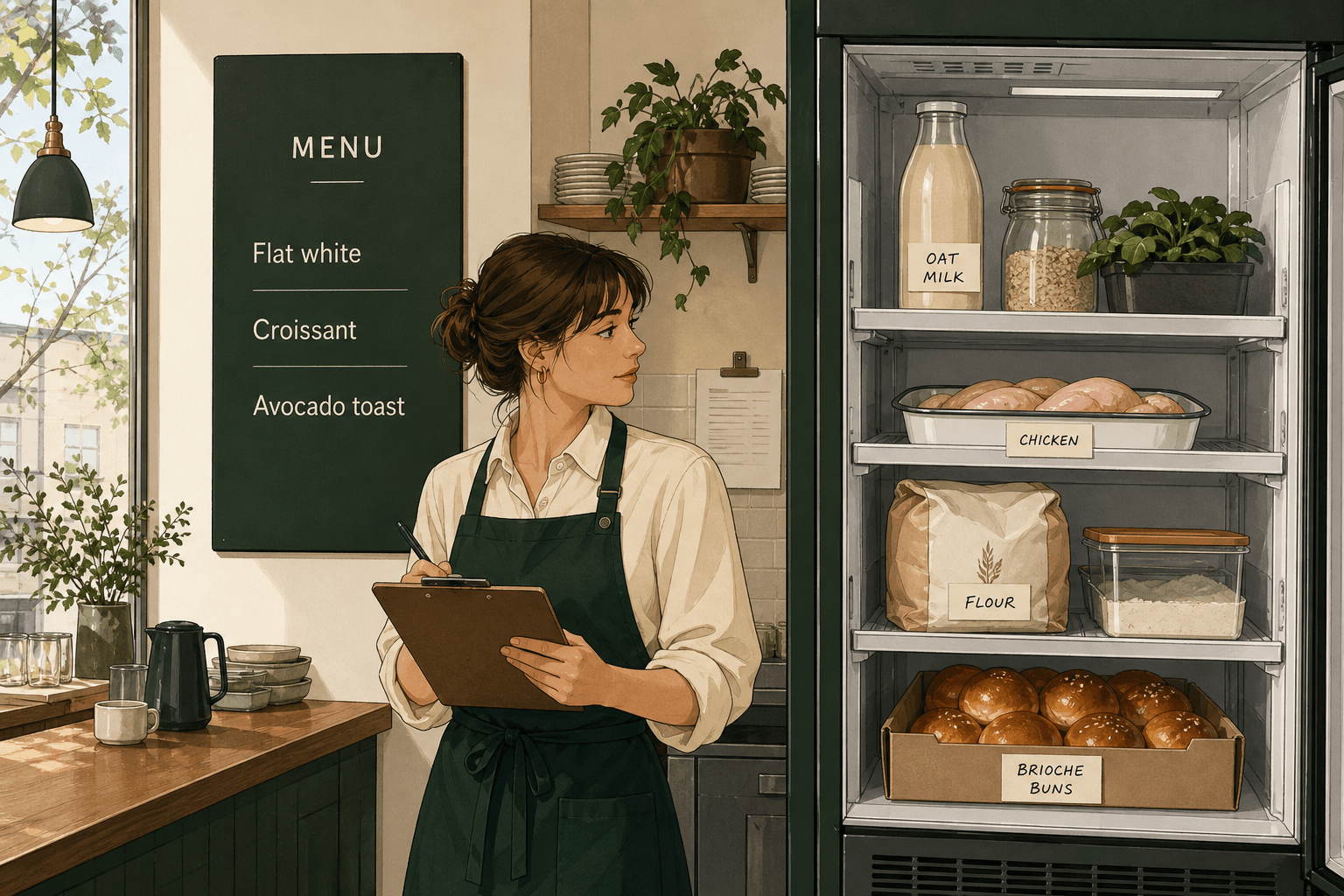
When a café owner first sets up food waste tracking, they do the obvious thing: copy the menu. Flat white, croissant, avocado toast. Done.
The problem is that waste does not happen at menu level. It happens before the croissant is baked, before the flat white is poured. The butter that went off. The oat milk left open overnight. The chicken prepped for tomorrow's special that never sold.
If your tracking list only mirrors your customer-facing menu, you are measuring the wrong thing.
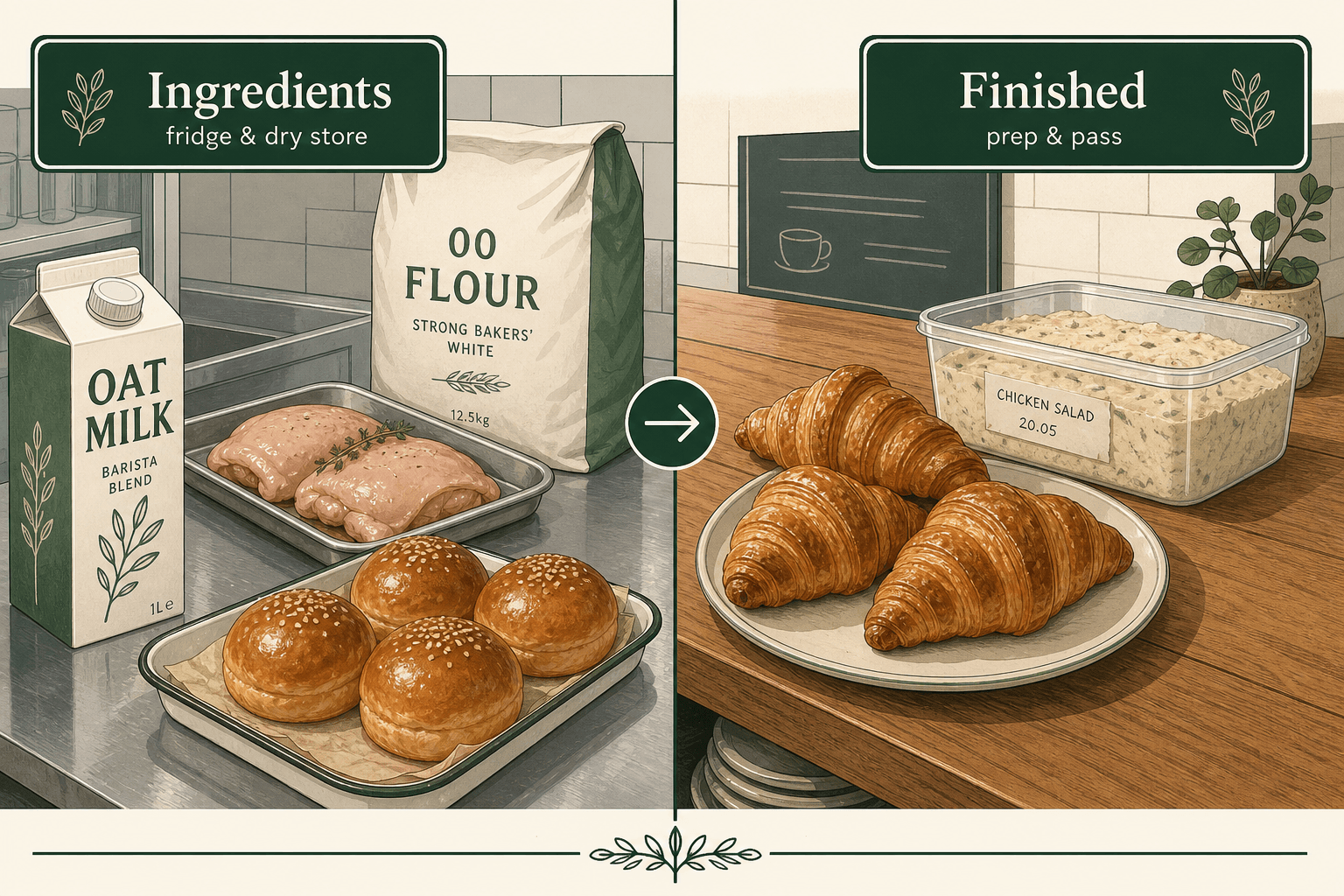
Two kinds of things worth tracking
Think of your café inventory in two buckets:
Raw ingredients — what you buy and store. Priced at what you pay. Spoilage happens here. Examples: oat milk, chicken thigh, flour, brioche buns.
Finished items — what you sell or prep for service. Priced at production cost. Over-prep waste lives here. Examples: croissant, morning pastry tray, BBQ prep batch.
Both matter. Most cafés only track finished items and ignore raw ingredients entirely.
Ingredient cost is not menu price
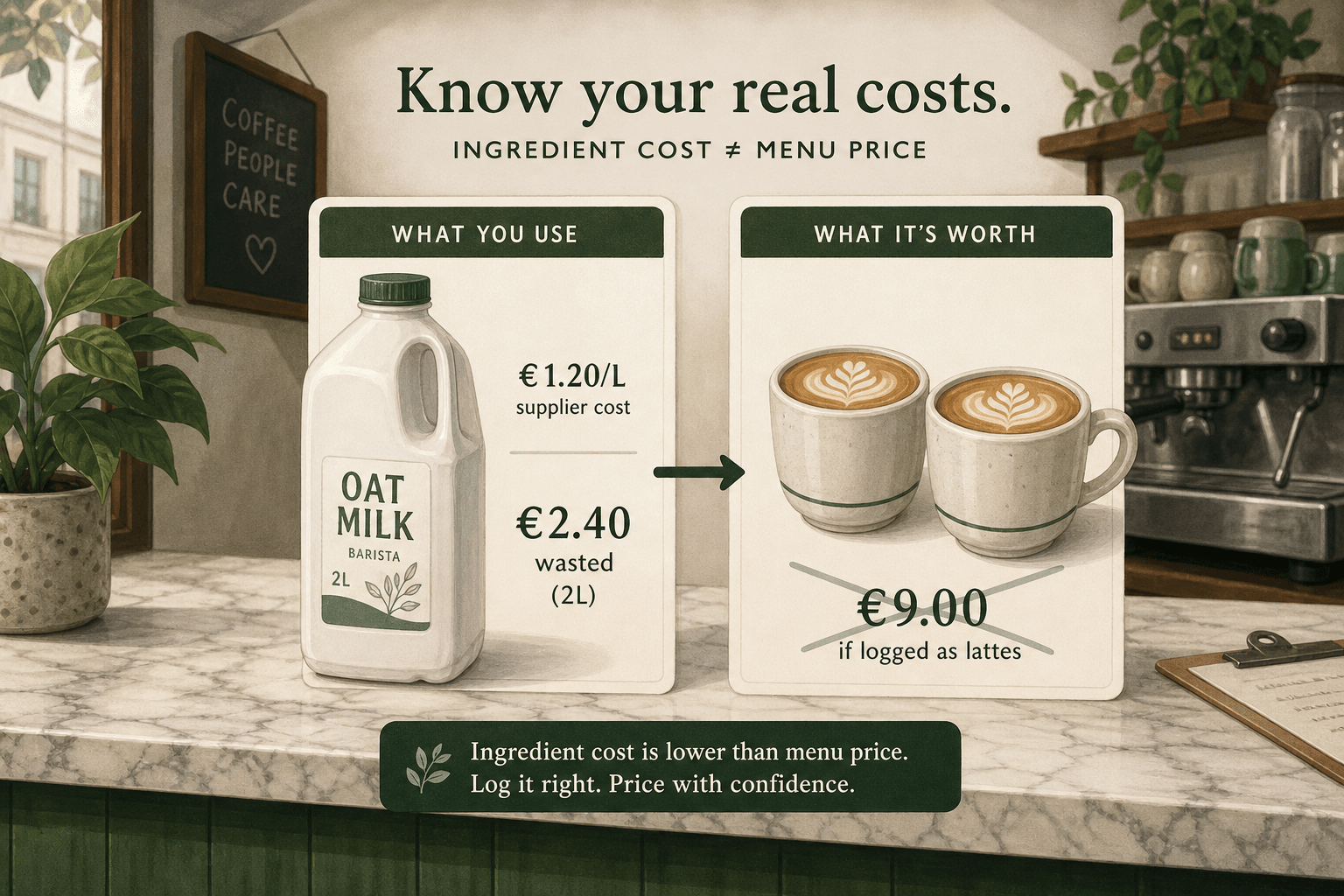
When three litres of oat milk go off, you did not lose the price of three oat milk lattes. You lost what you paid for three litres of oat milk — usually a fraction of the selling price.
Tracking at menu price inflates your waste cost. Tracking at ingredient cost gives you the real number: what it actually cost your business.
Example: Oat milk costs you €1.20 per litre. You waste 2L. Real cost: €2.40. If you logged it as "2 oat milk lattes" at €4.50 each, you would record €9.00 — nearly four times too high.
What belongs on your tracking list
A useful rule: if it lives in your fridge or dry store and you buy it in bulk, add it as an ingredient — not as a finished dish.
- Oat milk — litre, ingredient cost from your supplier
- Chicken thigh — kilogram, ingredient cost
- Brioche bun — item or pack, ingredient cost
- Flour — kilogram, ingredient cost
- Croissant — item, production cost (what it costs you to put it on the pass)
- BBQ prep batch — portion, production cost
Use the cost you pay — not the price on your menu board.
You do not need to track everything on day one
The mistake cafés make when they start is adding every single SKU at once. That becomes overwhelming and the habit dies in a week.
Start with 3–5 items that hurt when they drift — perishables, expensive proteins, specialty milks. The ones where waste or overstock actually moves your margin.
Made-to-order items work differently. A BBQ chicken sandwich does not need a morning stock count — you are not prepping forty of them at 7am. When prep goes wrong, you still want to log that waste. Track it as a finished item for floor logging; leave opening counts at zero if you never hold stock overnight.
Your tracking list is an operational tool
The distinction sounds small. In practice it changes what your reports tell you.
When you track raw ingredients alongside finished items — with accurate costs, not selling prices — waste reports show where money is actually leaving. That is the number worth acting on.
Structured logs also put you ahead of tightening EU food waste rules. National implementation of binding reduction targets is due by June 2027. Tracking at ingredient level now means you are building the audit trail regulators expect — not reconstructing it under pressure later.
Where Anteiku fits
Anteiku treats your tracking list as separate from your customer menu. Search the catalog for pastries and drinks, or add custom products with the right unit — litres, kilograms, portions — and your supplier cost.
Floor mode handles quick waste during service. Daily stock handles opening and closing for the items you actually count. Start small, expand when the habit holds.