
Every year, around 60 million tonnes of food is wasted across the European Union. Restaurants, cafés, and food service businesses are squarely in regulators' crosshairs — and the rules just got significantly stricter.
Here is what changed, what it means for your business, and what you should be doing about it.
What just changed
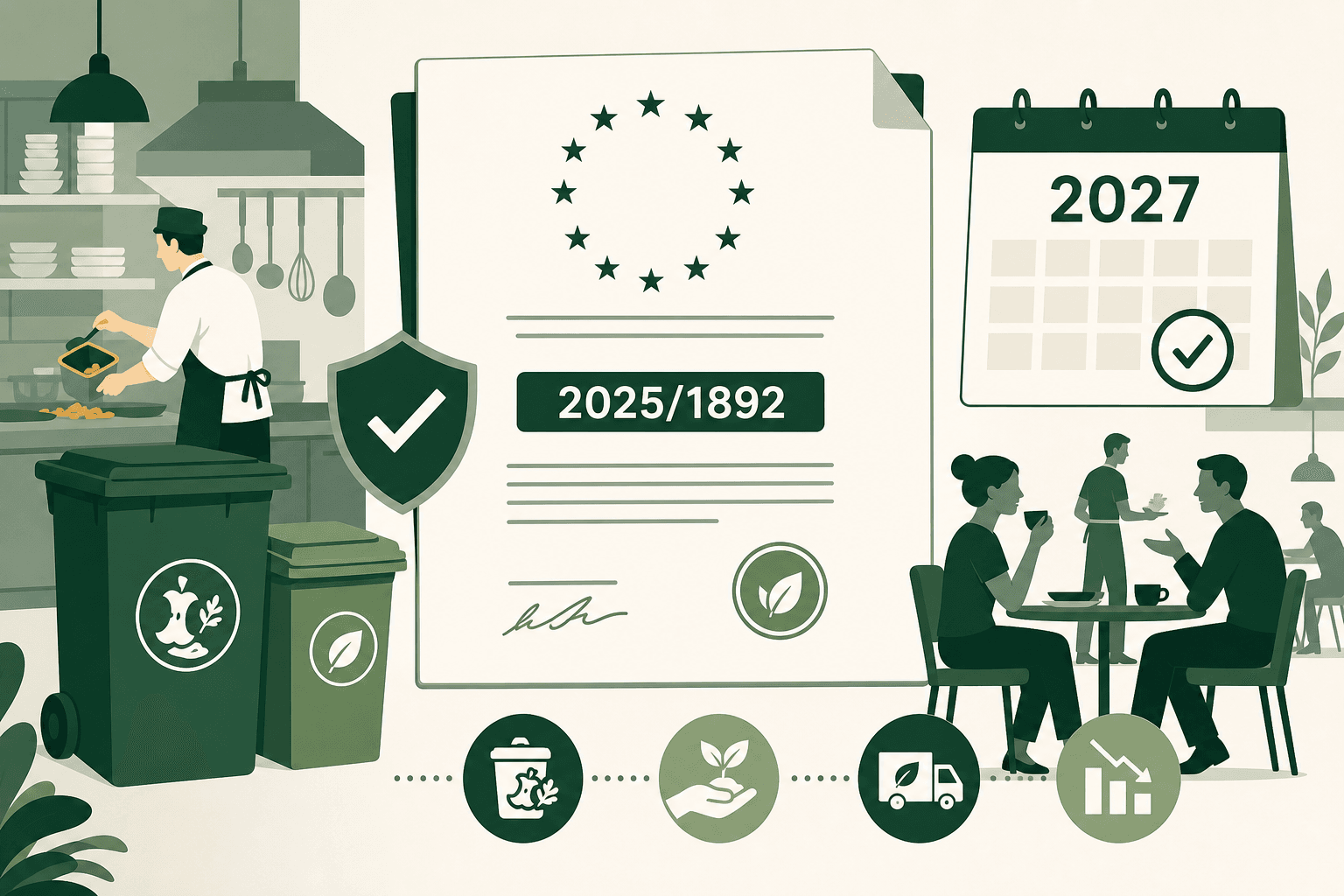
In September 2025, the EU formally adopted Directive 2025/1892, an amendment to the Waste Framework Directive that introduced binding food waste reduction targets across all Member States.
For the first time, restaurants, cafés, hotels, and catering services are explicitly named as sectors subject to expanded food waste management obligations. This is not a general environmental policy that vaguely applies to businesses — it directly targets how your kitchen handles, distributes, and tracks food.
Member States are required to transpose this into national law by June 2027.
The targets
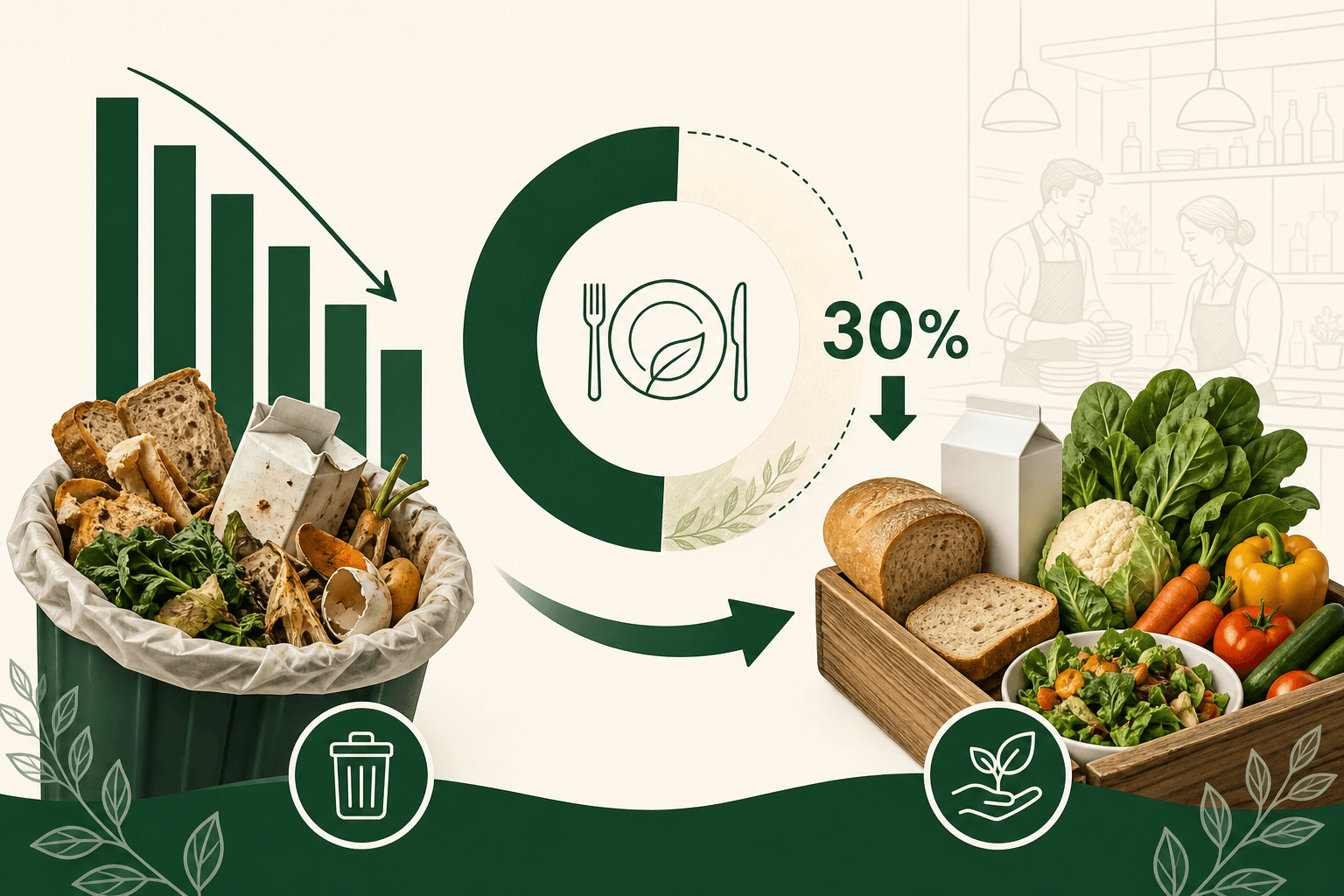
The directive sets a clear benchmark: a 30% reduction in food waste from retail, restaurants, food services, and households by 2030, compared to the annual average between 2021 and 2023.
That 30% figure is not aspirational. It is a binding target at the national level, which means your government is legally obligated to implement measures that push food businesses toward it.
What this means in practice
Regulations like this do not enforce themselves through goodwill. Governments will need data — and businesses will need to provide it.
Practically speaking, compliance in this space typically requires:
- Tracking waste quantities by category and stage
- Demonstrating preventive actions (ordering practices, stock management, portion control)
- Maintaining records that can withstand an audit or inspection
- Showing measurable improvement over time
A notebook or a spreadsheet you update occasionally will not cut it when an auditor asks for 12 months of structured waste data.
Where each country stands
The EU directive sets the floor. Individual countries move at different speeds, and some have already moved further:
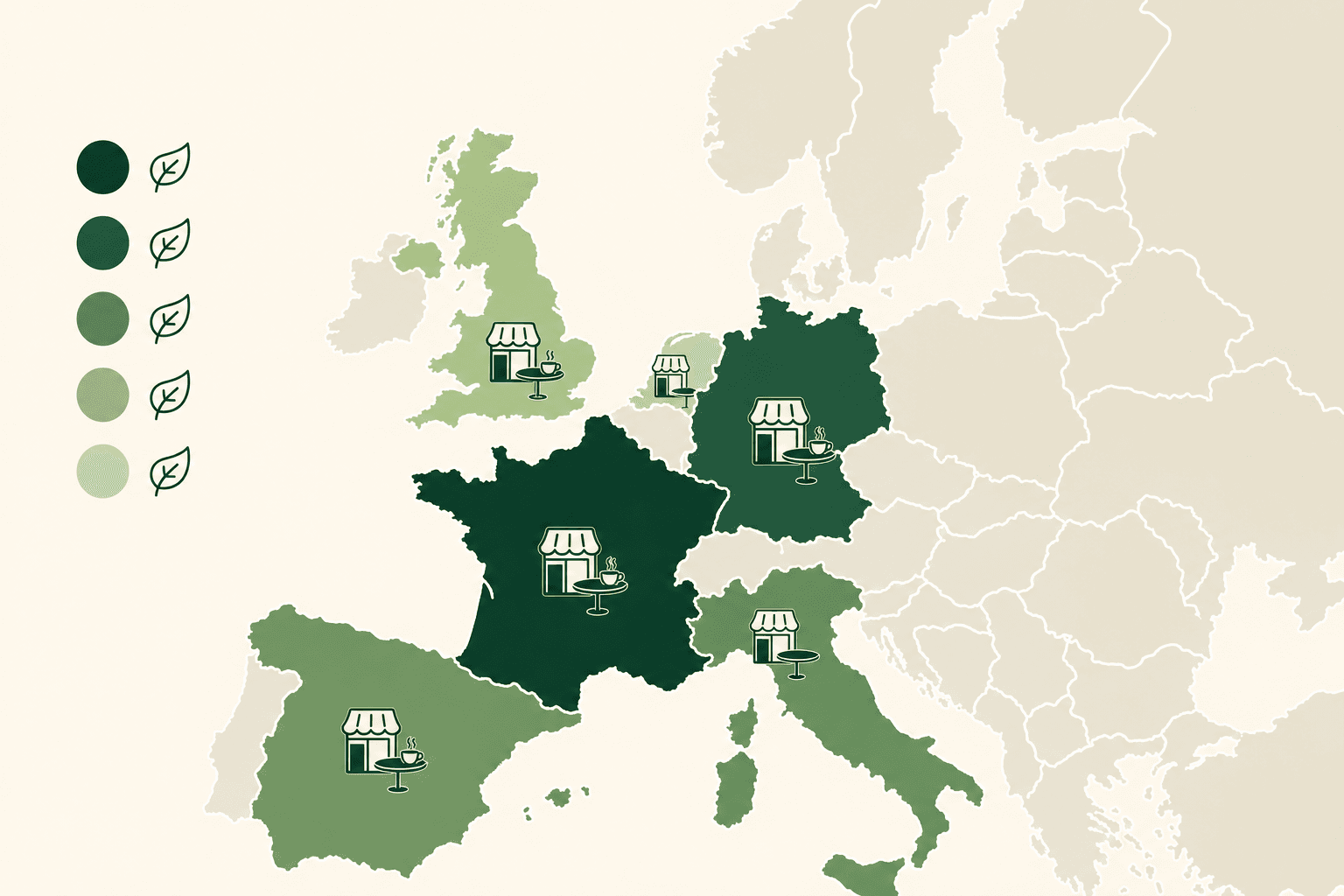
France is ahead of the curve. The AGEC law already mandates food waste tracking and reporting for food service operators. French businesses are not waiting for 2027 — they are already required to act.
Germany, Spain, and Italy are all advancing national frameworks aligned with the EU directive, with varying timelines for enforcement.
Netherlands and UK are currently softer in terms of immediate enforcement pressure, but the EU-level obligation means Dutch businesses will face national implementation requirements before the end of 2027. The UK, post-Brexit, is developing its own food waste reduction strategy, though it broadly mirrors EU direction.
The pattern across all markets is the same: early movers who build clean data trails now will be in a far stronger position when enforcement tightens.
The data problem
Here is where most independent cafés are exposed.
Most small food businesses do not have structured waste tracking. They rely on general experience, informal observations, or end-of-week stock counts to understand what was lost. That works well enough operationally — until a regulator asks for documentation.
Compliance requires records. Records require a system. And a system implemented the week before an inspection is not a system — it is a liability.
The businesses that will navigate this well are the ones that start logging waste now, at the item level, with timestamps and categories, so that by the time national rules land, they already have the data history regulators expect.

The opportunity hidden in the regulation
Compliance tends to get framed as a burden. It does not have to be.
Cafés that track food waste seriously — not just to tick a box, but to understand their numbers — consistently find meaningful cost savings. Food cost is one of the largest controllable expenses in any food business. Knowing exactly what you are throwing away, and why, gives you the information to order smarter, prep more accurately, and reduce avoidable loss.
The EU regulation is pushing businesses toward something that already makes financial sense. The compliance requirement and the cost-saving incentive are pointing in the same direction.
What to do now
The regulation is clear. The timeline is real. The practical steps are straightforward:
- Start tracking waste at the item level — not just totals, but by product, by day, with reasons where possible.
- Build a data trail — regulators and auditors want history, not snapshots.
- Understand your baseline — you cannot demonstrate a 30% reduction without knowing where you started.
- Choose tools that generate audit-ready reports — manual logs are better than nothing, but structured digital records are what compliance actually looks like.
The window to get ahead of this is now, before national implementation makes it urgent.